Arhive categorii: in English

The Life of a Missionary

The Life of a Missionary

By Sofia Katsareli, News 24-7, Greece
English Translation by Peter Souleles
Edited by Wid Bastian

Reprinted with permission.

The life of Father Themi Adamopoulos contains the lives of many people. In his youth he was a rock star who performed on the same stage as the Rolling Stones and the Beatles. He was an atheist, a Marxist, a young man with an enviable education and a promising career, as well as a champion of social justice who protested for the rights of the underdog. All of these lives however belong to the past because in recent years he has headed the Orthodox Mission in Sierra Leone.

With inexhaustible kindness and purity of love, his only goal is to provide for the have-nots. In Africa, where he is known as Father Themi, he is one of those rare human beings who give without expecting anything in return. He risks his life through a sense of love without fear. His tool is faith and his dream is for a better future for the children and heroic mothers of Africa.

Continuă să citești →

Holy Synod to elect new Ukrainian Orthodox Church leader on August 13

Holy Synod to elect new Ukrainian Orthodox Church leader on August 13

Holy Synod to elect new Ukrainian Orthodox Church leader on August 13


Kiev, July 8, Interfax – The Holy Synod of the Ukrainian Orthodox Church made the decision to elect its new leader on August 13.
“The Holy Synod of the Ukrainian Orthodox Church met on July 7 under the chairmanship of the Locum Tenens of the Metropolitan See Metropolitan Onufry of Chernovtsy and Bukovina, and made the decision to call the Ukrainian Orthodox Church’s Bishops Assembly in Kiev on August 13, 2014,” the Ukrainian Orthodox Church said on its website.Speaker of the Ukrainian Orthodox Church Archpriest Georgy Kovalenko said this process does not involve canvassing or polls. “Election of the primate does not involve an election campaign, canvassing, debates, presentations, or polls. Therefore, we hope the bishops, clergy and the flock will refrain from making forecasts, or commentaries,” Archpriest Georgy wrote on Facebook. Continuă să citești →

Serbian Church sends letter to Vatican

Serbian Church sends letter to Vatican

BELGRADE — A letter explaining the position of the Serbian Orthodox Church (SPC) regarding the canonization of Alojzije Stepinac was recently handed to a Vatican official.
Serbian Church sends letter to Vatican


The daily Politika writes that the letter was given to Secretary of the Holy See for Relations with States Dominique Mamberti, who has been on a visit to Serbia.

The content of the message, however, remains unknown, but the newspaper noted that the SPC “undoubtedly does not view favorably announcements that Stepinac could become a saint.”

Mamberti will also take with him to the Vatican another letter dedicated to the same subject, sent by the Serbian president.

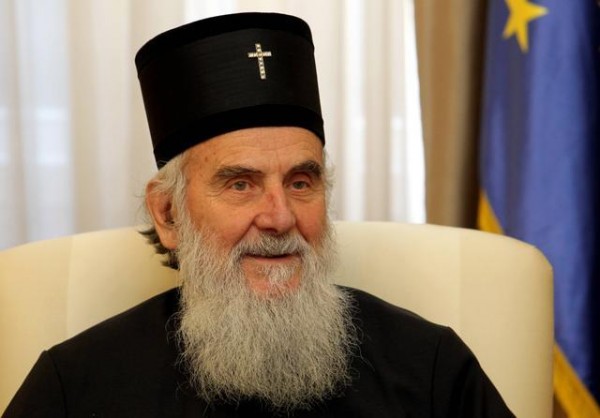
In an interview for Politika published in Sunday, SPC Patriarch Irinej said the announcements from the Vatican that Stepinac could be canonized by the end of the year came as “a great surprise” for the Serbian Orthodox dignitaries – “because in order for someone to be a saint, they must be a truly shining and holy personality and be accepted as such by other Christians.”

Stepinac was a WW2-era Croatian Catholic cardinal, convicted after the war for collaboration with the fascist Independent State of Croatia (NDH) entity. The NDH operated death camps during the war that were the sites of mass murder of Serbs, Jews, and Romas.

Source: http://www.pravmir.com

Becoming New Peters and Pauls

Becoming New Peters and Pauls

Archpriest Andrei Efanov


From the very beginning of Christ’s proclamation of the glad tidings, the Apostle Peter was right next to the God-Man. He saw the multitude of healings and raisings from the dead that the Lord performed; he was present both on Tabor and in Gethsemane; he received Communion at the Mystical Supper; and he was the first to confess Christ as God.

But except the Lord build the house, in vain do they labour that build it (Psalm 126:1). Simon did not become Peter until the Lord renewed him. His threefold denial of Christ demonstrates that human weakness can be very great.

But this betrayal did not extinguish Peter’s love for His Teacher. His words to Christ – Thou knowest that I love Thee – were not empty, because Christ replied to them with words full of confidence: Feed my sheep (John 21).
Continuă să citești →

Forgiveness – Do We Know What We’re Doing?

Forgiveness – Do We Know What We’re Doing?

Priest Stephen Freeman  

The first service of Great Lent in the Orthodox Church is “Forgiveness Vespers,” served on the eve of Monday of the First Week. There is nothing unusual about the service itself – other than the “rite of forgiveness” appended to it. In this, the priest and the faithful ask forgiveness of one another. Often this is done with mutual prostrations. Each asks the forgiveness of the other. The rite can take time, depending on the number in attendance. When it is complete, the long labors of Lent can begin. Fasting without forgiveness would be a hollow activity. This is a meditation I shared with my parish this week as the Sunday of Forgiveness approaches:

Perhaps the most generous words spoken by Christ are those we hear from the Cross: “Father, forgive them, for they do not know what they are doing.” Taken at face value, the words make little sense. Surely, those who crucified Christ knew that they were killing a man. Surely they were even aware that his execution was largely political and unjust. The centurion in charge of the crucifixion is said to have stated, “Surely this man was the Son of God.” So how could Christ say, “They do not know what they are doing?”

I believe this goes to the very heart of our lives and actions. We almost never know what we are doing. The greater context, the meaning of anything, is  hidden from us. We have children, work at a job, and live our lives, hoping that these have been worthwhile actions. We know that much, even most of what we have done has been tainted with bad intentions and other less-than-worthy motivations. But we never actually grasp the full scope of our actions. Even those good things that we do have a hidden aspect. Did that kind word spoken earlier make a difference? Did that act of charity actually change anything?

This hidden aspect of our lives is an inherent part of the human condition. We simply don’t know what we’re doing. This makes it very hard for us to judge our actions or to weigh them for their value. Continuă să citești →

Priest Geoffrey Korz: What Orthodox Families Must Do to Keep the Kids Orthodox

What Orthodox Families Must Do to Keep the Kids Orthodox

Priest Geoffrey Korz   

It is common in Orthodox parishes to find faithful people asking, why aren’t more kids coming to church? It’s an important question, since it raises two deeper issues: firstly, where will the Church in the Western World (outside traditionally Orthodox countries) be in twenty years, and secondly (and perhaps most critically); what on earth have Orthodox families been doing for the last few decades that has resulted in most parishes being almost devoid of young people?

Obviously, somewhere, the transmitting of the precious Orthodox faith from one generation to the next has not been accomplished. Of course, building faith in young people is a one-to-one exercise, requiring the time and concerted effort of parents, who bear the primary responsibility for this task. If young adults (or not-so-young adults) do not love Christ’s Church, the question must be asked, what exactly has been the highest priority of their home life? Academics? Getting a good job? Sports? Social life? Entertainment?

Saint Paul tells us that whatever we sow, that is the thing that we shall reap (Galatians 6:7): whatever we put into our children – a love of music, international travel experiences, unbridled ambition, a concern for the poor – it is very likely that this will profoundly shape their character. Similarly, as St. John Chrysostom tells us, the things that we allow to surround our children will either reinforce or undermine our primary influence on the life of our children (his Admonition to Parents is a tremendously helpful read for all mothers and fathers). Where can we start with this immense task? Consider the following: Continuă să citești →

Position of the Moscow Patriarchate on the problem of primacy in the Universal Church

Position of the Moscow Patriarchate on the problem of primacy in the Universal Church

The problem of primacy in the Universal Church has been repeatedly raised during the work of the Joint International Commission on Theological Dialogue Between the Orthodox Church and the Roman Catholic Church. On March 27, 2007, the Holy Synod of the Russian Orthodox Church instructed the Synodal Theological Commission to study this problem and draft an official position of the Moscow Patriarchate on the problem (Minutes, No. 26). Meanwhile, the Joint Commission at its meeting on October 13, 2007, in Ravenna, working in the absence of a delegation of the Russian Church and without consideration for her opinion, adopted a document on the Ecclesiological and Canonical Consequences of the Sacramental Nature of the Church. Having studied the Ravenna document, the Russian Orthodox Church disagreed with it in the part that refers to synodality and primacy on the level of the Universal Church. Since the Ravenna document makes a distinction between three levels of church administration, namely, local, regional and universal, the following position taken by the Moscow Patriarchate on the problem of primacy in the Universal Church deals with this problem on the three levels as well.

1. In the Holy Church of Christ, primacy belongs to her Head – our Lord and Saviour Jesus Christ, the Son of God and the Son of Man. According to St. Paul, the Lord Jesus Christ is the head of the body, the church: who is the beginning, the firstborn from the dead; that in all things he might have the pre-eminence (Col. 1:18).

According to the apostolic teaching, the God of our Lord Jesus Christ, the Father of glory, raised him from the dead, and set him at his own right hand in the heavenly places, far above all principality, and power, and might, and dominion, and every name that is named, not only in this world, but also in that which is to come.And hath put all things under his feet, and gave him to bethe head over all things to the church,which is his body (Eph. 1:17-23). Continuă să citești →

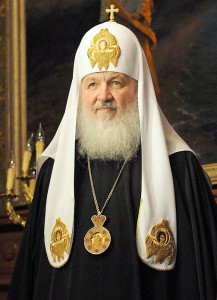
Patriarch Kirill of Moscow and All Russia: How to Form Our Lives on the Basis of Faith: On St. Nicholas the Wonderworker

How to Form Our Lives on the Basis of Faith:

On St. Nicholas the Wonderworker

Patriarch Kirill of Moscow and All Russia 


In the Name of the Father, and of the Son, and of the Holy Spirit!
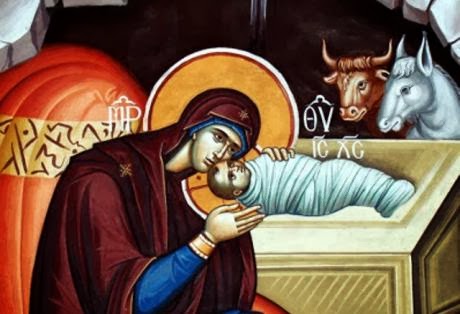
Today our Church solemnly glorifies the memory of St. Nicholas the Wonderworker, Archbishop of Myra in Lycia. St. Nicholas lived at the end of the third and beginning of the fourth centuries. Nearly 1,700 years separate us from him, but the Church has carefully preserved his memory throughout all these centuries because he lived such an extraordinary life, acquiring great power of spirit and drawing so near to God through his ardent faith that God granted him the special power of performing miracles.

The Church’s memory is its Tradition. Having studied history, we know about certain historical events, but think of them rarely; we very often forget what we learned in school or college. This memory is dead, it is no longer alive; it no longer enters the activity of our spiritual powers, it has no continual effect on the human mind. But the memory preserved in the Church, the Tradition of the Church, is a living memory; it is supported and fertilized by the sincere prayer that man raises to those whom he remembers: the holy saints of God. Continuă să citești →

Christmas Christology: An Interview with Metropolitan Hierotheos of Nafpaktos

Christmas Christology: An Interview with Metropolitan Hierotheos of Nafpaktos


This interview with his Eminence Metropolitan Hierotheos of Nafpaktos and Agiou Vlasiou was published in the journal „Καθ’ οδόν” by the Community Youth of the Sacred Metropolis of Limassol, and as the reader will see, the questions cover a large part of the Christology of Christmas.
 
Question: The word Χριστούγεννα (Greek word for „Christmas”) means the birth of Christ. We would like you to tell us what was the purpose of the birth of Christ and generally why did the Word of God have to incarnate. Couldn’t there have been another way for the salvation of the human race?
 
Answer: As it is written throughout our biblical-patristic tradition, the purpose of the Incarnation of the Word of God is the theosis of humanity, which means that He who according to His nature is God became man, that we may become gods according to Grace. In one of his discourses, Athanasius the Great analyzes that God sent the Prophets in the Old Testament to speak to His people, but ultimately the issue was how man will be deified and how he will be released from death. The law could not save, but it prepared the people to accept Christ, which is why it was our „pedagogue in Christ” (Gal. 3:24). Christ by His incarnation united to His Person the divine and human nature, that it may be the „medicine” for our theosis, and He received an extremely pure yet mortal and sufferable body that He may suffer and conquer death. For example, when a drug is discovered the possibility is given to each person to use it for their healing. This is what took place with the incarnation of Christ, who offered the „medicine of immortality”, according to Saint Ignatius the God-bearer. Continuă să citești →

Bishop Seraphim of Piraeus Against Homosexual Cohabitation Agreement

Bishop Seraphim of Piraeus Against Homosexual Cohabitation Agreement


Bishop Seraphim of Piraeus is threatening to excommunicate any member of the Greek Parliament that votes for the amendment to include same-sex couples in the Cohabitation Agreement.

A few days after Greece’s conviction by the Strasbourg Court, which ruled the exclusion of same-sex couples from the Cohabitation Agreement contrary to the European Convention of Human Rights, the government is discussing a new regulation. Continuă să citești →

The Monasticism of the Panagia

The Monasticism of the Panagia

 
Fresco of the Entrance of the Theotokos (Hilandari Monastery, Mount Athos)
By Archimandrite Porphyrios,
Abbot of the Sacred Monastery of the Honorable Forerunner in Beroia
The feast of the Entrance of the Theotokos is called by my fathers on the Holy Mountain „the monasticism of the Panagia” (η καλογερική της Παναγίας).
 
Elder Gelasios loved her very much and would say that Papa-Thanasi, his Elder, the holy abbot of Gregoriou, honored her very much. And on one such day Elder Gelasios saw my Elder co-liturgizing with Saint James the Brother of God, who preserved this tradition.
 
The Panagia enters the Holy of Holies. Her parents, our grandparents Saint Joachim and Saint Anna, fulfill their vow. Many young girls of Jerusalem hold lit lamps and open a red cloth, like the bridal cloth that would be put on the backs of couples in olden times at the time of the celebration of the sacred mystery of Marriage.
 
How many symbols! And how many centuries has the world waited for this hour! For the Ever-Virgin to enter into a prepared place, where male high priests trembled to approach and enter once every annual cycle. Continuă să citești →

Fasting as an Ecclesiastical Notion

Fasting as an Ecclesiastical Notion

 
By Stylianos Gerasimos
As we know, the Church has designated certain times of the ecclesiastical year for fasting. Entering the month of November we begin the Christmas fast, which starts on November 15th and ends on December 24th. During this fast fish is allowed until December 17th, except on Wednesdays and Fridays.
 
The Greek word for fasting, „νηστεία”, is complex. It consists of the particle „νη”, which indicates deprivation, and the verb „εσθίω”, which means „eating”. So the Greek word for fasting means total abstinence from all food. Today, however, fasting means abstaining from certain foods. This led to the creation of two words: νηστήσιμος (pro-fasting) andαρτύσιμος (non-fasting). That is, there are foods we can eat during a fast which are called νηστήσιμες, and there are foods we can’t eat which are called αρτύσιμες. Continuă să citești →

ABORTIONS, SAME-SEX „MARRIAGES” AND EGOISM WILL LEAD THE WORLD TO CATASTROPHE

ABORTIONS, SAME-SEX „MARRIAGES” AND EGOISM WILL LEAD THE WORLD TO CATASTROPHE

Belgrade, September 26, 2013


„At the present time, children in the world number 6 million less than in 1990, and this is just the beginning of the catastrophe. According to the UN assessments, by 2050 there will be 240 million less children in the world than now,” said the communications director of the World Congress of Families (WCF), American journalist and lawyer Don Feder at the international conference, „Defence of Family Values” in Belgrade, September 26 reports ITAR-TASS. „That is a result of the disastrous ideas, attitude and policy that the Western countries have been pushing since the end of the First World War”.  Continuă să citești →

Patriarch Neophyte of Bulgaria meets with Metropolitan Vladimir of Kiev and All Ukraine

Patriarch Neophyte of Bulgaria meets with Metropolitan Vladimir of Kiev and All Ukraine

*

July 29, 2013 – His Beatitude Metropolitan Vladimir of Kiev and All Ukraine met with His Holiness Patriarch Neophyte of Bulgaria and Metropolitan Gabriel of Lovec, who participated in the celebrations marking the 1025th anniversary of the Baptism of Rus’, at the Metropolitan’s residence in the Theophania Monastery in Kiev.

The Metropolitan discussed with his guests the results of the past celebrations and thanked Patriarch Neophyte for this response to the invitation of the Russian Orthodox Church to come for the celebrations.

They also discussed some problems of inter-church cooperation.

Participating in the meeting were also Metropolitan Anthony of Borispol, chancellor of the Ukrainian Orthodox Church and rector of Kiev Theological Schools, Bishop Philaret of Novaya Kakhovka and Genichesk and Archimandrite Philip (Vasiltsev), representative of the Patriarch of Moscow to the Patriarch of Bulgaria.

Source: DECR via http://www.pravmir.com

Russian Orthodox Church to give $1 mn to Syrian residents

Russian Orthodox Church to give $1 mn to Syrian residents

f09ad133ffbanner.jpgMoscow: The Russian Orthodox Church is preparing to give over 1.3 million US dollars to residents of Syrian cities, spokesman of the Synodal Department for Church Charity and Social Ministry Vasily Rulinsky said.

In an interview with Izvestiya newspaper, Rulinsky said, “The Antioch Church’s Department for External Church Relations and Development helps. Clothes, mattresses, foodstuff and hygienic essentials are being given to those in need. Thus, our assistance will be very important.”

“At the end of June Patriarch Kirill of Moscow and All Russia urged believers to help those who fall victims of the armed conflict in Syria. Funds, which were collected by the Russian Orthodox Church eparchies, are being sent to the accounts of the Synodal Department for Church Charity and Social Ministry. Then the funds will be handed over to Patriarch John X of Antioch and All the East, as well as to Supreme Mufti Ahmad Badreddin Hassoun of Syria.

The Izvestiya wrote that from July 2012 over 5,000 people have died in Syria. For two years of the armed conflict at least 93,000 people were killed.

The head of the Independent International Commission of Inquiry on the Syrian Arab Republic said the Syrian conflict had caused USD 60-80 billion damage. (Itar-Tass)

Source: Zee News via http://www.pravmir.com