Arhive categorii: in English

June 29th – Holy Glorious and all praised Leaders of the Apostles, Peter & Paul

June 29th – Holy Glorious and all praised Leaders of the Apostles, Peter & Paul

.

Saint Peter, originally known as Simon,
was the son of a man named John,
and his brother’s name was Andrew.
We also know that he was married,
since Jesus cured his mother-in-law at the family home
at Bethsaida in Gallilee [Matth.8: 14-17].

A fisherman by trade, Jesus was to call Peter,
along with his brother Andrew and James and John,
to leave everything behind to become His followers.
He said to them
“Come after me, and I will make you fishers of men“.
Matthew 4: 19

It is because of Peter’s confession of faith
in Jesus as Messiah
that Jesus gave him the nickname of “rock”
and stated that
it was upon the rock of Peter’s faith
that the Church would rise [Matth.16: 18].
All the Gospel writers list Peter first
when naming the apostles of Jesus,
and there is no doubt that Peter was
the “first among equals”
in the minds of the earliest Christians.
Time and again in the Gospels, however,
Peter demonstrates that his faith is imperfect, but growing.
He says things that make Jesus react strongly:
he denies that Jesus’ coming death should ever be allowed to happen [Matth.16: 22],
tells Jesus at the last Supper that He will never wash his feet [John 13: 8],
and denies association with Jesus three times, Continuă să citești →

STORIES AND PARABLES for study at home – THE WEDDING SHIRT

THE WEDDING SHIRT

.

*** Continuă să citești →

A Vacation… From Orthodoxy?

A Vacation… From Orthodoxy?

.

Summer is here. More and more parishioners are approaching me with the request: “Batiushka, bless me to go on vacation.” Following this request, as a rule, come a great many questions about how to combine rest with our faith.

When replying to the majority of these questions, I take a personal approach. The personalities, situations, and state of health of my parishioners vary a great deal. Nonetheless, there are some principles and frequently asked questions that are worth talking about in general, in the hope of making life easier for those going on vacation.

Vassily Nesterenko, „Summer in Jerusalem,” 1996

Taking a rest is not only permissible, but necessary. Ideally, our rest from the vanity of this world should consist of prayer and communion with God. We need a vacation from whatever we consider work. When prayer is a joy, when fasting has become as habitual as breathing, and when we wait impatiently all year to go on pilgrimage, then the question of the compatibility of vacationing and faith simply does not come up – and no rest from faith is required.

The reality is that a certain portion of our spiritual lives is taken up by labor and discipline. Everyone has his own boundary between spiritual joy and ascetic struggle. Therefore, advice should be offered primarily on an individual basis. Continuă să citești →

So Your Child Wants to Become a Monastic

So Your Child Wants to Become a Monastic

.

I should like to ask you to think of something you may not have onsidered before; how would you feel if your son or daughter expressed the desire to enter a monastery? You may be an Orthodox Christian, and very devout; you may be diligent in attending services and reading spiritual books; you may have tried your best to raise your children in an Orthodox Tewahedo manner; you may even admire Monasticism. Nonetheless, how would you really feel?

We live in a time and society quite different from years ago where monasticism was a visible and acceptable part of every day life. It was not uncommon for entire families to make pilgrimages to monasteries. Few people today, in the Western world, however, have any significant exposure to Monasticism and it is little wonder that in our un-Orthodox and even anti-Christian society, the very thought of one’s child becoming a monastic, Monk or Nun, can seem very threatening.


There are a number of reasons one can give for such a reaction. Lack of familiarity breeds fear. Not a few people imagine Monasticism to be very grim and even inhuman. They may envision their child locked behind a grating and subsisting for the rest of his or her life on bread and water. The other extreme is an equally- erroneous view of a romanticized spiritual state in which the child spends his days floating above the ground in an exalted state of endless holiness. In both cases it is imagined that entering a monastery presupposes leaving behind the human race. Continuă să citești →

Maurice Banjoko – 'How I became Orthodox'

Maurice Banjoko – ‘How I became Orthodox’

*

Maurice Banjoko from Nigeria, Investment Consultant, in his interview with Pemptousia talks about how he became Orthodox.

*

Vezi video

Sursa: http://www.pemptousia.com/videogallery/?v=22872

Communique of the Holy Assembly of Bishops of the Serbian Orthodox Church

Communique of the Holy Assembly of Bishops of the Serbian Orthodox Church

30. May 2012 – 9:52COMMUNIQUE
of the Holy Assembly of Bishops of the Serbian Orthodox Church
Held in Belgrade May 15-23, 2012

The regular meeting of the Assembly of Bishops of the Serbian Orthodox Church took place at the Serbian Patriarchate in Belgrade May 15-23, under the presidency of His Holiness Serbian Patriarch Irinej. Participating in the Assembly were all the diocesan hierarchs of the Serbian Orthodox Church, with the exception of His Beatitude Archbishop of Ochrid and Metropolitan of Skopje Jovan who is unjustly imprisoned in the Skoplje prison of Idrizovo and His Grace Bishop Chrysostom of Bihac and Petrovac.

The Assembly began its work with the joint serving of the hierarchical Divine Liturgy in the Holy Archangel Michael Cathedral in Belgrade, led by Serbian Patriarch Irinej, and served the Invocation of the Holy Spirit, the Spirit of truth and wisdom, in Whom the Church lives and always works, especially in the assemblies of its bishops. During the liturgy Bishop Irinej of Backa, with the blessing of His Holiness Patriarch Irinej, addressed the faithful and explained the institution of the assembly of bishops as an expression of the essential conciliar nature of the Church. After the Divine Liturgy, at the beginning of the first session, the president of the Assembly, His Holiness Patriarch Irinej, addressed some of the current issues from the life and mission of the Church in our time, a time of great temptation here and throughout the world, but also a time of hope and opportunity for spiritual renewal. Continuă să citești →

PREDICĂ LA DUMINICA A CINCEA DIN POSTUL MARE A MITROPOLITULUI ANTONIE DE SUROJ (VIDEO – english & greek)

Patriarch Kirill receives delegation of the Patriarchate of Jerusalem

Patriarch Kirill receives delegation of the Patriarchate of Jerusalem

On March 14, 2012, His Holiness Patriarch Kirill of Moscow and All Russia met with a delegation of the Patriarchate of Jerusalem at the Patriarchal chambers of the Church of Christ the Saviour.

The delegation included Archbishop Aristarchos of Constantina, Archbishop Theophylaktos of Jordan and Archimandrite Stephanos (Dispirakis), representative of the Patriarch of the Holy City of Jerusalem and All Palestine to the Patriarch of Moscow and All Russia. Participating in the meeting were also Metropolitan Hilarion of Volokolamsk, head of the Moscow Patriarchate’s department for external church relations, Archpriest Nikolay Balashov, a DECR vice-chairman, Archpriest Igor Yakimchuk, DECR secretary for inter-Orthodox relations, and Fr. Stephan (Igumnov), a DECR staff member.

The Primate of the Russian Orthodox Church welcomed the guests, ‘envoys of the Mother of all the Churches of God – the Church of Zion, the Church of the Holy City of Jerusalem’.

Patriarch Kirill expressed solidarity with Christians in the Middle East, saying, ‘As a result of the destabilized political situation in the Middle East, scores of thousands of Christians have come to face a threat to their lives. These political developments have provoked an outflow of Christians from Middle East countries, and we look with great concern at these developments. We are grieved and disturbed by the reduction of the Christian population in the biblical region, including under the impact of the present political events. The Patriarchate of Jerusalem bears a special responsibility for the preservation of holy places and churches and for the preservation of the Orthodox faith in the Middle East. Please convey my words of support to His Beatitude Theophilos, Patriarch of Jerusalem and All Palestine’. Continuă să citești →

The announcement of the Synod of the Hierarchy of the Church of Greece for the crisis (EN)

Read the announcement of the Synod of the Hierarchy of the Church of Greece as it was decided at 8th of March:

In the person of each human being the Church sees the most honourable creature of God, for the salvation of which Christ offered His blood. By preserving like a precious treasure in Its spiritual Artophorionthe Command of Christ that man should love his fellow-man in deed, and with a sense of pastoral responsibility,the Church becomes actively involved in charitable works which also attend to the material needs of man. It does not do so for the purposes of ostentationbut rather seizes every opportunity to express Its love of God’s image. Continuă să citești →

Sermon on the Sunday of Orthodoxy [2012] – Fr. Dorin Picioruş

Sermon on the Sunday of Orthodoxy [2012]

My beloved,

I think that we have to see this Sunday as one who speaks about our future. For that the future of Orthodoxy isjust as important as it’s past.

And the Holy Icons, that we restored in the Church on 11 March 843, they are and now in danger of beingabolished.

Not from the Church…but from society.

Because the society starts to exclude religious symbols…or minimizes their importance.

For what makes postmodernity when reduces humanity to the body? Or what is an empty body, in the dirty magazines, than a body drained of spiritual beauty, of candor?

But, on the other hand, what bad produces the religious symbols…when our world is full of commercialsymbols? Continuă să citești →

Interview with Fr. Moses Berry: "The Church belongs to everyone"

Interview with Fr. Moses Berry:

„The Church belongs to everyone”

.

Fr. Moses Berry

Fr. Moses Berry, an OCA priest ministering at Theotokos “Unexpected Joy” Orthodox Church in Ash Grove, Missouri, has an unusual story. In 1998, he moved with his family from St. Louis to his family’s farm in Ash Grove, near Springfield. Century Farm has been in the Berry family since 1872; on the property a cemetery dedicated to “Slaves, Paupers, and Indians” needed maintenance and oversight, and so Fr. Moses left a mission in the city to return to his rural boyhood home.

A small group of faithful collected around the new mission, Theotokos “Unexpected Joy.”  The tiny cemetery chapel hosted the first services; in 2000 the mission was received into the Orthodox Church in America, and in 2003 parishioners erected a temple.

Fr. Moses travels widely to give talks on mission and also on local Afro-American history; folks who have met him elsewhere often stop by to worship when they pass through the area. In addition to leading the parish, Fr. Moses also heads up The Brotherhood of St Moses the Black, a pan-Orthodox nonprofit organization which presents an annual conference targeting those who have little exposure to Orthodoxy or its African roots.

Recently, oca.org interviewed Fr. Moses about his unique ministry.

1.  Father, for those who might not be familiar with your background, can you give us a snapshot of how you came to be an OCA priest? Continuă să citești →

Liturgy at Resurrection Church in the Capital of Morocco

Archbishop  Michael Celebrates Liturgy at

Resurrection Church in the Capital of Morocco

.

On February 15, 2012, the feast   day of the Meeting of the Lord, His Eminence Archbishop Michael of Geneva   and Western Europe celebrated Divine Liturgy at Resurrection of the   Lord Russian Orthodox Church in Rabat, the capital of Morocco. He was   joined by the parish rector, Priest Maksim Massalitine. This was the   first time a hierarch of the Russian Orthodox Church Outside of Russia   has performed divine services in this church in its 80-year history.

After Liturgy, Vladyka Michael   shared a trapeza with the parishioners, during which he shared his recollections   of one of his spiritual guides, Bishop Mitrophan (Znosko-Borovsky, 1909-2002),   rector for many years of Dormition Church of the Russian Church Abroad   in Casablanca. Bishop Mitrophan died on the very day of the Meeting   of the Lord exactly ten years ago.

As reported by the website   of Resurrection Church in Rabat, Archbishop Michael’s visit to Morocco   from February 15-17 included tending to the pastoral ministry of the   Russian Orthodox community in Casablanca, chaired an extraordinary meeting   of the Parish Association of Dormition Church. The archpastor also met   with the Extraordinary and Plenipotentiary Ambassador of the Russian   Federation to the Kingdom of Morocco, BF Bolotin, and the Director of   the Russian Center for Science and Culture in Rabat, NV Sukhov.

On February 17, Archbishop   Michael returned to Geneva.

Source: http://www.synod.com

Orthodox Church in America featured in Catholic Near East Association magazine

Orthodox Church in America featured in Catholic Near East Association magazine

SYOSSET, NY [OCA]

Catholic Near East

The Orthodox Church in America is the topic of a feature article in this month’s issue of ONE Magazine, published by the Catholic Near East Welfare Association [CNEWA].
The generally well-written and researched article may be accessed on-line.
The only major criticism that one could raise would be the use of statistics in the second to the last paragraph, in which the author seems to confuse the total estimated number of all Orthodox Christians in North America — “recently, church authorities reported 1,064,000 members,” he notes — with the number of OCA members.  With regard to the latter, the author states that “studies, including one published by the church’s evangelization committee [of the OCA], report much lower figures: no more than 40,000 full members.
“Fluid definitions of membership may also account for the discrepancy,” he adds.
The article is accompanied by a gallery of several excellent photographs.

A companion article highlights the iconographic work of an Orthodox nun in Romania.

Source: http://oca.org

Strong Orthodox Christian presence at annual DC March for Life

Strong Orthodox Christian presence at annual DC March for Life

WASHINGTON, DC [OCA]

March for Life


His Beatitude, Metropolitan Jonah, together with Their Graces, Bishops Tikhon of Philadelphia and Eastern Pennsylvania, Melchisedek of Pittsburgh and Western Pennsylvania, Michael of New York and New Jersey, and Matthias of Chicago and the Midwest were led hundreds of Orthodox Christian clergy, faithful, and seminarians at the 39th annual March for Life here Monday, January 23, 2012.
According to Archpriest John Kowalczyk, a pro-life activist and co-founder of the Orthodox Presence at the annual gathering, “this was the biggest Orthodox participation ever in the history of the March.”

Metropolitan Jonah spoke at the pre-March program and offered prayers for the opening invocation. At the conclusion of every petition, thousands responded with a heartfelt and enthusiastic “Lord, have mercy!”  Marchers then proceeded up Constitution Avenue to the US Supreme Court, where a Memorial was celebrated for the victims of abortion.
The March was broadcast live on the Eternal Word Television Network [EWTN], which will rebroadcast it’s extensive coverage at 2:00 p.m. ET on Saturday, January 28.  Check local listings for possible variations.

Source: http://oca.org

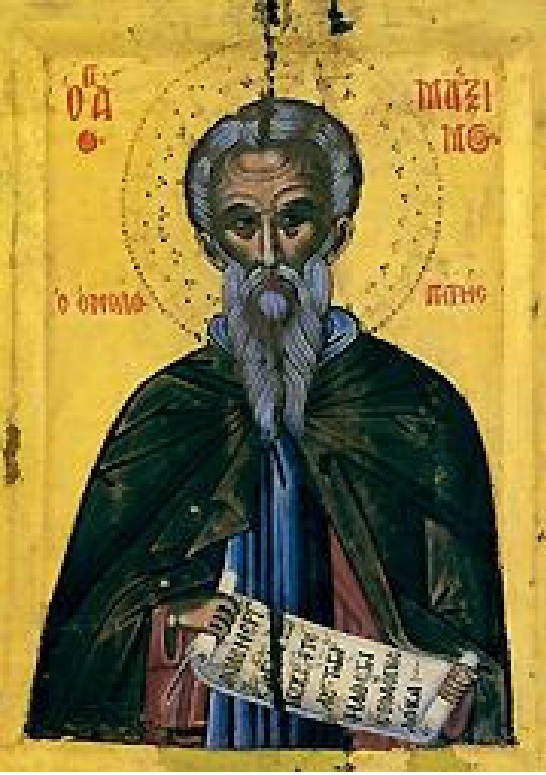
JANUARY 21: SAINT MAXIMOS THE CONFESSOR – ONE BRAVE CONFESSION

Απόσπασμα από τό βιβλίο του Μητροπολίτου Φλωρίνης π. Αυγουστίνου Καντιώτου  «Μυρίπνοα Άνθη – Fragrant Flowers»!

JANUARY 21

SAINT MAXIMOS THE CONFESSOR

Majimos Omologitis


ONE BRAVE CONFESSION

On the 21st of January, my beloved, we celebrate the feast of one of the most brave preachers and confessors of our Orthodox faith, Saint Maximos.  To him we dedicate this short sermon.

***

Saint Maximos lived in the seventh century A.D.  He was born in Constantinople.  He loved education from childhood.  He studied philosophy and theology and he was admired for his education.  Due to his talents he was received as a high administrator in the emperor’s court.  He quickly became the chief secretary, which was a great honor.  At that time the emperor was Heracleios – the one who defeated the Persians and took back the Holy Cross which the barbarians had seized.  During his reign the city was saved from the siege of the Avars and the people chanted for the first time the Akathist Hymn.  Heracleios was a faithful and pious king.  On the serious subject of heresy, however, he showed a degree of leniency which Maximos did not like at all.  Maximos considered the heretics very dangerous and he wanted the State to observe a strict stance in their relation to the Church.  The heretics were so audacious that, if they were left free, there was a danger that a great part of the population would fall prey to their heresy.  At that time the heresy of monotheletism was spreading. Continuă să citești →