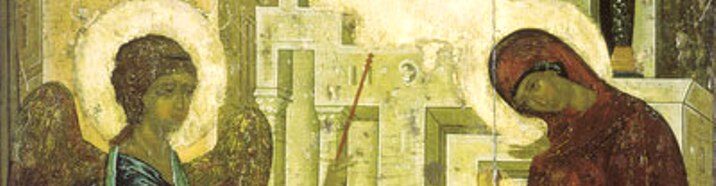
Sfânta Mare Muceniţă Varvara, ilustraţie de manuscris athonit, secolul al XII-lea
Sfânta Mare Muceniţă Varvara s-a născut în anul 290 d.H. în oraşul antic Heliopolis (Oraşul Soarelui) din regiunea Koíli (Celesyria), Siria, actualul oraş libanez Balbek (oraşul lui Baal, zeul soarelui), în vremea împăratului roman Maximian, marele prigonitor al creştinilor. Părintele ei, Dioscor, era eparh al orașului, adică guvernator local, om bogat, plin de putere lumească și de strălucire, însă idolatru fanatic. Ca s-o păzească pe prescumpa și preafrumoasa lui fiică și s-o păstreze neîntinată și neatinsă, a costruit un turn, în interiorul cărui a amenajat o casă plină de toată bogăția. Acolo a ținut-o pe Varvara până la vârsta căsătoriei.
Fără rugăciune nu se poate vorbi despre o viaţă duhovnicească. Prin ea se întoarce omul către Dumnezeu, şi fără ea nu poate să facă nimic (In 15, 5); prin rugăciune cere el ajutorul lui Dumnezeu, se deschide harului şi se uneşte cu El. Rugăciunea, aşa cum am văzut, este condiţia cu neputinţă de ocolit a lucrării poruncilor, a nimicirii patimilor şi a împlinirii tuturor virtuţilor, şi îndeosebi a iubirii, care duc la unirea cu Dumnezeu.
Pentru toate aceste pricini, şi în special datorită legăturii ei cu iubirea, rugăciunea apare ca cea care îl urcă pe om la cunoaşterea/vederea lui Dumnezeu.
Dar între ele există şi o legătură mai directă. Sfântul Maxim spune că „starea de rugăciune înfăţişează (mintea) lui Dumnezeu însuşi”, statornicind-o în El. Iar Sfântul Grigorie Palama lămureşte astfel: „Părtăşia la virtuţi, prin asemănarea (cu Dumnezeu) pe care o aduce în om, îl face capabil pe acesta să-L primească pe Dumnezeu. Iar primirea Lui se lucrează prin puterea rugăciunii”. Sfântul Părinte mai spune că rugăciunea este cheia cunoaşterii lui Dumnezeu, că ea „aduce această fericită vedere” a lui Dumnezeu. Legătura lor este atât de intimă, încât Părinţii spun că darul cunoaşterii şi al vederii lui Dumnezeu se dă numai adâncului rugăciunii desăvârşite, numită şi „rugăciunea curată”, în care, după cum arată Sfântul Isaac Sirul, „îşi află sfârşitul” toate „felurile şi chipurile rugăciunii”.
Arhim. Serafim Alexiev: Păcatele mici, socotite neînsemnate, nasc în om deprinderea de a păcătui
„De ce să mă spovedesc? Eu nu am nici un păcat mare. Să se mărturisească cei ce au ucis, au jefuit, au săvârşit nelegiuiri sau vreun alt fel de păcat.”
În cea dintâi împrejurare, omul nu crede că va fi iertat din pricina apăsătoarei conştiinţe a păcătoşeniei sale, iar aici lipseşte orice conştiinţă a păcătoşeniei.
„Nu am păcate mari…” Dar este, oare, cu adevărat aşa? Dacă un om stă mai multă vreme închis într-o cămăruţă, se obişnuieşte cu aerul stricat şi nici nu simte cât este de neplăcut. Însă de va intra cineva de afară, nu va putea răbda duhoarea adunată în cameră şi va ieşi îndată.
Să răspundă cei ce spun „Nu am păcate mari” dacă Îl au pe Hristos în inima lor? Acestuia îi place să locuiască în inimi curate. Sunt, însă, inimile lor curate? Greu de zis! Ei se închipuie curaţi, însă închipuirile nu pot fi luate drept adevăr.
„De vom zice că păcat nu avem, pre noi înşine înşelăm şi adevăr nu este întru noi.” 1 In. 1,8 Şi acolo unde este minciuna, nu se află Hristos! Continuă să citești →
ADUCEREA MOAŞTELOR SFÂNTULUI DIONISIE I, PATRIARHUL CONSTANTINOPOLULUI
Mă bucur nespus şi dau slavă lui Dumnezeu că îmi dă prilejul să cercetez şi să scriu despre ucenicul unuia din cei mai iubiţi, neglijaţi şi – de către unii – şi contestaţi sfinţi din luna ianuarie, despre unul din ucenicii celui care a fost numit de către sinaxar „Atlas” ce ţine pe umerii săi Ortodoxia, precum Atlas din mitologie ţine pe umerii săi tăria: Sfântul Marcu Evghenicul, Mitropolitul Efesului. Aportul Sfântului Marcu la teologia Bisericii nu s-a încheiat odată cu vremelnica sa mutare din această viaţă (1444). Ca un iscusit duhovnic şi harismatic înainte-văzător, el a lăsat în urma sa ucenici, fii duhovniceşti şi împreună-lucrători osârdnici şi valoroşi, care i-au confirmat insuflarea şi vederea duhovnicească la începutul perioadei turcocraţiei.
Sfântul Marcu a fost părintele duhovnicesc a doi viitori patriarhi ecumenici, proslăviţi ca sfinţi: Ghenadie al II-lea Scholarul şi Dionisie I, dar şi ai altor trei patriarhi de Constantinopol: Isidor al II-lea, Marcu al II-lea şi Ioachim I. Aceştia au păstorit Biserica Primului Tron în a doua jumătate a secolului al XV-lea, imediat după cucerirea Constantinopolului. Sfântul Marcu a fost înainte de toate un mare nevoitor şi isihast, care a fost silit de împrejurări să devină un polemist, dar şi conducătorul luptei împotriva unei false şi rătăcitoare uniri cu Roma catolică. După mutarea sa în cer, lupta cea bună a fost continuată de vrednicii săi fii duhovniceşti. Continuă să citești →
Cuvânt rostit de către Prea Cuviosul Arhimandrit Gheorghe Kapsanis, egumenul Mănăstirii Grigoriu, în prea sfânta Biserică a Protatului din Sfântul Munte, în Duminica Ortodoxiei (1981), la porunca Sfintei Kinotite, cu prilejul aflării sfintelor moaşte a nou-arătatului Sfinţit Mucenic Cosma, Protosul Sfântului Munte, care a fost spânzurat de latinocugetători.
Harul Sfântului Duh ne-a adunat astăzi din Sfintele Mănăstiri, din Schituri şi din sihăstriile Sfântului Munte, ca să mulţumim şi să slavoslovim pe Atotsfânta şi de viaţă începătoare Treime, pentru aflarea în aceste vremuri de pe urmă a sfintelor moaşte ale Sfinţitului Mucenic Cosma, Protosul Sfântului Munte. Ne-a adunat şi pentru a prăznui biruinţa Sfintei noastre Credinţe Ortodoxe împotriva tuturor iconomahilor şi a tuturor prigonitorilor ei de peste veacuri, cu mare mulţumire faţă de Domnul pentru preţioasa comoară pe care o avem în această viaţă, credinţa noastră ortodoxă, în care ne-am născut, în care ne-am botezat, în care trăim şi în care nădăjduim cu harul lui Dumnezeu să şi murim. Continuă să citești →
(Video) Părintele Adrian Făgeţeanu – Despre vremurile din urmă
Mărturii, Universul Credinţei, 30 septembrie 2012
Părintele Adrian Făgețeanu a trecut la cele veșnice pe 27.09.2011, în spitalul „Dr. Marius Nasta” din București . Trupul neînsuflețit al părintelui a fost înmormântat sâmbătă, 01.10.2011, la ora 12.00, în cimitirul Mănăstirii Lainici. Veșnica lui pomenire!
ÎPS Andrei Andreicuț despre Părintele Adrian Făgețeanu
Eram preot în Turda. Un mijloc eficient de misiune, mai ales pentru acele vremuri, era pelerinajul. În cadrul unui pelerinaj am ajuns la Mănăstirea Surpatele. Nu bănuiam atunci că Părintele Adrian, duhovnicul mănăstirii, are în spate o viață zbuciumată de mărturisitor. Era blând și binevoitor, receptiv la necazurile oamenilor și dispus la a-i povățui pe cei tineri. Mai târziu l-am întâlnit la Mănăstirea Antim.Continuă să citești →
Postul Naşterii Domnului sau al Crăciunului, precum şi celelalte posturi rânduite în Biserică, oferă creştinilor posibilitatea curăţirii duhovniceşti. Acesta închipuie ajunarea de patruzeci de zile a Prorocului Moise şi postul patriarhilor din Vechiul Testament. După cum aceia aşteptau venirea lui Mesia cu post şi rugăciune, aşa se cuvine să aştepte creştinii şi să întâmpine prin ajunare pe Cuvântul lui Dumnezeu născut din Fecioara Maria.
În ziua Sfântului Apostol Filip, adică pe 14 noiembrie, este Lăsatul secului pentru Postul Naşterii Domnului, care începe la 15 noiembrie şi se termină la 25 decembrie.
Despre semnificaţiile postului şi despre roadele pe care el le aduce în inimile şi sufletele celor care postesc ne-a vorbit Arhim. Clement Haralam, de la Mănăstirea Antim din Bucureşti. „Acum, la începutul Postului Crăciunului, să reflectăm puţin la ceea ce este postul ca stare şi îndeletnicire creştinească. Post înseamnă abţinere. Mai întâi abţinere de la anumite mâncăruri în vederea parcurgerii unui timp rezervat pentru post. De la masă nu trebuie să te scoli flămând, dar nici sătul. În perioadele de post cel care nu posteşte cu adevărat poate să se lăcomească la anumite alimente sau mâncăruri care să-i pricinuiască vătămare corporală şi sufletească. Abţinere mai înseamnă a nu-ţi îngădui săvârşirea de fapte imorale, pronunţarea cuvintelor nepotrivite, anumite gesturi care întinează conştiinţa şi curăţia sufletească, care robesc inima, încarcă memoria cu imagini, fapte sau cuvinte nefolositoare, gesturi şi cuvinte care ne periclitează mântuirea, onoarea, cinstea de persoană şi de creştin-ortodox“, a spus arhim. Clement Haralam. Continuă să citești →
Chilia Sfântului Grigorie Palama de la Marea Lavră
Silviu Cluci
Chilia „Sfântul Sava” unde s-a nevoit timp de trei ani Sfântul Ierarh Grigorie Palama
După venirea sa în Sfântul Munte, timp de trei ani, Sfântul Grigorie a rămas sub ascultarea marelui duhovnic Nicodim, trăind într-o peșteră din apropierea mănăstirii Vatoped. După slăvita adormire întru Domnul a părintelui său duhovnicesc, merse la Marea Lavră pentru a-şi continua viaţa ascetică. Pentru aceasta, s-a aşezat în apropierea mănăstirii la catisma Sfântului Sava.
În numele Tatălui şi al Fiului şi al Sfântului Duh.
Iubiţi credincioşi, mâine la Sfânta Liturghie, în Duminica a VIII-a în care citim din Sfânta Evanghelie după Luca, vom auzi una din cele mai frumoase pilde pe care le-a rostit Domnul nostru Iisus Hristos. De aceea, vă rog să faceţi puţină răbdare, ca să ascultaţi un cuvânt de învăţătură, pentru că e bine ca orice adunare a noastră în Hristos să fie însoţită de un cuvânt de învăţătură spre luminarea, înţelepţirea şi îndreptarea noastră.
Este vorba despre Pilda samarineanului milostiv. Mulţi dintre frăţiile voastre aţi auzit-o. Odinioară, educatorii, învăţătorii, dar mai înainte de aceştia, părinţii şi bunicii noştri, istoriseau copiilor din pildele Mântuitorului, şi le istoriseau şi această pildă a Samarineanului milostiv. Nu-şi pierdeau timpul cu basme de Petre Ispirescu, ci fructificau şi valorificau timpul educaţiei cu aceste istorioare, cu aceste pilde desprinse din sfintele cuvinte ale Domnului nostru. Şi astăzi, deşi religia e persecutată în instituţiile de învăţământ şi ameninţată cu marginalizarea, sau chiar cu eliminarea din şcoli, cu nivelarea, şi se vrea mai mult o istorie a religiilor decât principiile învăţăturii noastre de credinţă şi morala creştin-ortodoxă, noi mai păstrăm imaginea vie, icoana însufleţită a casei sau a şcolii în care părinţii, bunicii, educatorii şi învăţătorii îi mângâiau pe copii cu cuvintele lui Dumnezeu, aşa cum cloşca îşi mângâie puişorii, adunându-i sub aripile ei şi protejându-i.
Ştim pilda Samarineanului milostiv. Dar deşi o ştim, nu o aplicăm, nu o traducem în viaţa noastră, nu o interiorizăm, nu o împlinim. Şi Domnul Hristos ne spune undeva în Sfânta Evanghelie că sluga care ştiind voia stăpânului său nu a împlinit-o, aceea va fi vrednică de mai multă bătaie, de mai multă pedeapsă. Iubiţi credincioşi, dacă am împlini pilda Samarineanului milostiv în viaţa noastră, lumea noastră s-ar transforma într-un rai. Dar din păcate nu o împlinim. O ştim, dar o ştim spre osânda noastră. Continuă să citești →
„Nu va mai exista potop cu apă, însă va veni un alt potop. Nu însă de ape curate, ci de foc, foc nuclear va cădea! Cine ne va salva? Doar mila, iubirea!”
„I-a zis deci Iisus: Mergi, de fă şi tu asemenea” (Luca 10, 37)
Două, iubiţii mei creştini, două sunt drumurile. Al treilea nu există. Unul este drumul lui Dumnezeu şi altul este drumul diavolului. Fiecare om este liber să aleagă unul din cele două. Pe drumul lui Dumnezeu ne cheamă conştiinţa noastră, legea nescrisă – dar ne cheamă şi legea scrisă, legea lui Dumnezeu, Sfânta şi sfinţita Evanghelie. Domnul nostru ne cheamă astăzi – nu aţi auzit? – „Mergi de fă şi tu asemenea”, mergi şi fă ceea ce a făcut acela (Luca 10, 37). Care „acela”? Bunul samarinean. Dar oare cine se ascunde în spatele acestui bun samarinean, care este propus drept pildă de urmare? Continuă să citești →
Sfinţii Martiri Năsăudeni Atanasie Todoran din Bichigiu, Vasile din Telciu, Grigorie din Zagra şi Vasile din Mocod
†Macarie Drăgoi – Episcopul Europei de Nord
Zona Năsăudului, acest străvechi colţ de ţară românească, a dat mereu prin oamenii ei dovezi de apărare a demnităţii naţionale şi a credinţei strămoşeşti. Un asemenea exemplu vrednic de pomenire este cel al lui Atanasie (în graiul popular al locului „Tănase” al lui Dănilă) şi ai celorlalţi dimpreună cu dânsul, Continuă să citești →
PREDICĂ LA DUMINICA A XXV-A DUPĂ POGORÂREA SFÂNTULUI DUH
din “Predici la duminici şi sărbători”
„Şi, apropiindu-se, a legat rănile lui, turnând pe ele untdelemn şi vin” (Luca 10, 34)
Adevăratul samarinean este cel care se îngrijeşte şi de sufletul cel bolnav al aproapelui
Model de purtare de grijă pentru mântuirea sufletească a altora ne dă nouă Însuşi Dumnezeu. Mai întâi S-a îngrijit pentru Adam, înainte de căderea lui în păcat, spre a-l feri de aceasta. De aceea, a zis către dânsul: „Din toţi pomii din rai poţi să mănânci, iar din pomul cunoştinţei binelui şi răului să nu mănânci, căci, în ziua în care vei mânca din el, vei muri negreşit!” (Facerea 2, 16-17).
Iată că atât prin uşurinţa legii, cât şi prin mulţimea pomilor învoiţi şi prin asprimea pedepsei celei ameninţătoare, Dumnezeu S-a îngrijit de mântuirea sufletească a lui Adam şi voia a-l opri de la păcat. Aşadar, în tot chipul a căutat Dumnezeu să întărească pe Adam împotriva păcatului, însă cu toată această îngrijire, cu toată această îndemnare şi sfătuire, cu toată bunătatea lui Dumnezeu, Adam totuşi a căzut şi nu a păzit porunca. Totuşi, Dumnezeu n-a zis: „Ce să mai fac Eu şi ce ar folosi aici? El a mâncat, a căzut în păcat, a călcat porunca, a crezut diavolului, a dispreţuit rânduiala Mea. pentru care acum a căzut în nenorocire, în moarte şi întru osândă, ce să mai vorbesc cu dânsul de acum?”. Continuă să citești →
Dragostea de aproapele în învățătura Părintelui Iosif Isihastul
Învăţătura Părintelui Iosif Isihastul (1898-1959) despre iubirea de aproapele e nemijlocit legată de predania Sfintelor Scripturi şi a tradiţiei patristice, dar are şi o noutate a ei, izvorâtă din slujirea sa de stareţ şi duhovnic şi din trăirea lăuntrică.
Este izbitor faptul că mai tot ce spune Părintele Iosif Isihastul despre iubirea de aproapele e legat de viaţa mănăstirească si totuşi cuvintele sale răzbat dincolo de zidurile mănăstirii şi de ele se folosesc şi cei care trăiesc în mijlocul lumii. Pentru că viaţa călugărească este – sau s-ar cuveni să fie – o icoană pentru toţi creştinii şi chiar pentru întregul neam omenesc.
În traiul creştinesc, legătura de dragoste dintre fraţii de credinţă este fundamentală, de aceea multe învăţături ale Părintelui Iosif privesc felul în care se cuvine să ne purtăm ca să păstrăm legătura iubirii (cf. Rom. 12, 10), pe care diavolul caută necontenit s-o strice; pierderea ei aduce numai rele atât pentru întreaga obşte, cât şi pentru fiecare mădular al ei.
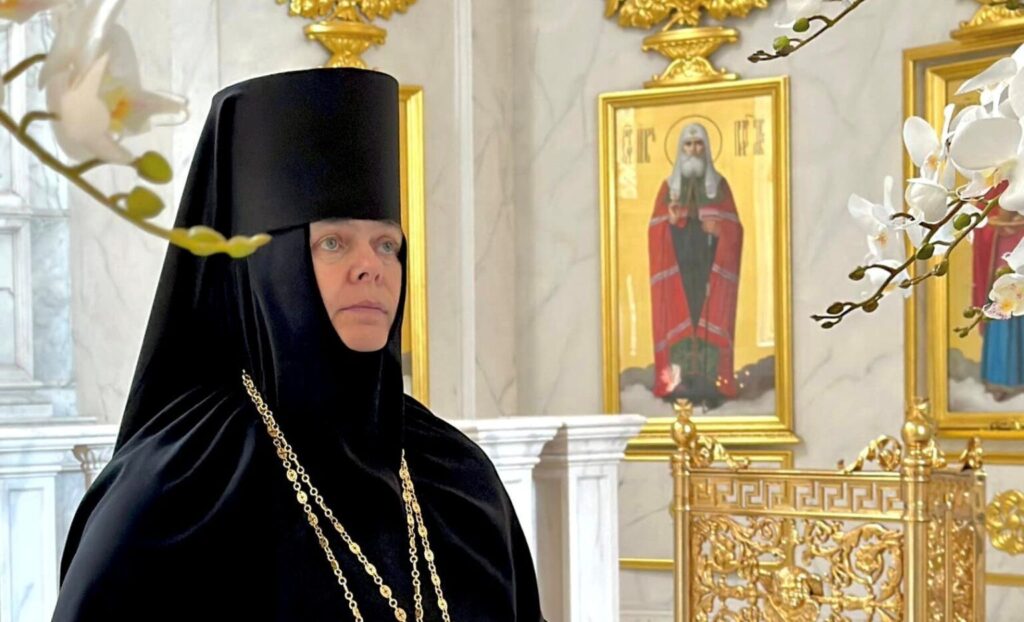
Open letter from Mother Superior Seraphima (Shevchik), Chair of the Synodal Department of the Ukrainian Orthodox Church “Church and Culture,” volunteer, and member of the National Union of Journalists of Ukraine
To
1. Secretary-General of the United Nations, Antonio Guterres
2. President of the European Commission, Ursula von der Leyen
3. President of the European Council, Charles Michel
4. High Representative of the European Union for Foreign Affairs and Security Policy, Josep Borrell
5. Chairperson-in-Office of the Organization for Security and Co-operation in Europe (OSCE), Bujar Osmani
6. President of the European Parliament, Robertа Metsola
7. President of the European Court of Human Rights (ECtHR), Siofrid O’Leari
8. High Commissioner for Human Rights (OHCHR), Volker Türk
9. Director-General of UNESCO, Audrey Azoulay
10. Secretary-General of the World Council of Churches, Jerry Pillay
11. President of the Conference of European Churches, Mikityo Luliasa
12. President of the United States of America, Joe Biden
13. Prime Minister of Japan, Fumio Kishida
14. Prime Minister of the United Kingdom, Rishi Sunak
15. Prime Minister of Italy, Giorgi Meloni
16. Prime Minister of Canada, Justin Trudeau
17. Federal Chancellor of the Federal Republic of Germany, Olaf Scholz
18. President of France, Emmanuel Macron
19. Commissioner of the United States Commission on International Religious Freedom (USCIRF), Suzie Gelman
20. Director of the OSCE Office for Democratic Institutions and HumanRights (ODIHR), Matteo Mecacci
Those who share the thoughts and concerns expressed in this open letter are kindly requested to leave their electronic signature by filling out the Google Form: https://forms.gle/qPBZhsdWTLZ2GU4V9
This will help stop discriminatory and repressive measures against the Ukrainian Orthodox Church.
***
We, the believers of the Ukrainian Orthodox Church (UOC), address you in connection with the violation of our rights to freedom of conscience and religion. This pertains to our confession and our personal civil rights and freedoms. These violations occur both at the local level and at higher levels of authority.
At the local level, this is manifested in decisions made by regional, municipal, district, and village councils to ban the Ukrainian Orthodox Church and seize land and property from its parishes and monasteries. This is done in a completely unlawful manner, as Ukrainian legislation does not grant these authorities such powers. The process of making these decisions by local councils has spread to many regions of Ukraine and has reached the city of Kyiv and the Kyiv region.
The Ukrainian Orthodox Church and human rights advocates have repeatedly appealed to both local councils and Ministry of Culture, which is responsible for overseeing the religious situation in the country asking them to stop this illegal practice. However, neither they nor any domestic oversight bodies have taken a stand against these blatant violations of the law.
Representatives of certain state legislative and executive bodies have initiated a systematic campaign to discredit the Ukrainian Orthodox Church. They justify the ban on the UOC by alleging connections between the UOC and the aggressor country and the threat that our confession poses to national security.
The cornerstones of these repressive actions are the principles of presumption of guilt and collective responsibility. However, domestic and international laws are based on the principles of presumption of innocence and individual responsibility for committing legal violations. Accusing an entire confession of the wrongdoings of some of its members is nonsensical. Such practices were only seen in totalitarian countries.
Threats to ban the UOC, eliminate its central offices and diocesan structures, and confiscate its churches, monasteries, and holy sites are becoming more pronounced. Many mass media outlets including state-owned ones are fueling an atmosphere of xenophobia toward our confession, spreading fake news and biased materials. In the Ukrainian Parliament (Verkhovna Rada), 11 different bills are being considered against the Ukrainian Orthodox Church (UOC) with the aim of banning its existence and functioning. None of these bills comply with the norms of the Ukrainian Constitution and legislation, as well as basic European and international standards concerning the protection of religious rights and freedoms.
Currently, the Verkhovna Rada is addressing the issue of ensuring the rights of the Ukrainian LGBT community. Simultaneously, while caring for this relatively small social group, the Rada is preparing to ban the largest confession in Ukraine, which has a multi-million congregation.
The climax of this undemocratic policy and practice was the adoption of bill No. 8371 in the first reading on October 19 of this year, which proposes to ban religious organizations affiliated with the religious centers located outside Ukraine in a state that conducts armed aggression against Ukraine. This introduces certain provisions that directly contradict the Ukrainian Constitution and the Law of Ukraine “On Freedom of Conscience and Religious Organizations.”
While analyzing the bill, the Main Scientific and Expert Department of the Verkhovna Rada’s Apparatus expressed its concerns about its compliance with the law. Independent legal expertise of the bill documents numerous instances of its inconsistency with the Constitution and the Law of Ukraine “On Freedom of Conscience and Religious Organizations.” Unfortunately, the deputies who voted for this bill ignored all the reservations made by lawyers and human rights activists regarding its unconstitutional content.
The purpose of these actions is to prove that the UOC has an administrative connection with the Moscow Patriarchate and, using this accusation, to ban it. According to the provisions of the bill, this connection is determined through a religious studies expertise which is supposed to be carried out by the State Service for Ethnic Policy and Freedom of Conscience (SSEPFC).
This structure is headed by V. Yelensky who worked in the Committee for Religious Affairs under the Cabinet of Ministers of the Ukrainian Soviet Socialist Republic during the Soviet era. This committee was responsible for overseeing the religious situation in Soviet Ukraine and was an instrument of repressive policies in this sphere. At that time, V. Yelensky wrote atheistic and anti-clerical works in line with the communist anti-religious paradigm. These works are kept in the Ukrainian libraries nowadays. Currently, V. Yelensky is representing the state in the field of religious and ethnic policy.
He has always been very outspoken and intolerant regarding the Ukrainian Orthodox Church and continues to do so in his capacity as the head of SSEPFC. He openly states the need to liquidate the UOC and make its faithful transition to the new confession created in 2018 – the Orthodox Church of Ukraine (OCU).
Similarly, other officials including the leadership of the Ministry of Culture act in the same way. They openly talk about the need to shut down the UOC and have all its priests, monks, and parishioners move to the OCU. This selectivity in dealing with confessions is a violation of the law. According to the Ukrainian Constitution, all confessions are equal, and none of them can enjoy state preferences.
They claim that the OCU is a “patriotic” confession, while they accuse our Church of collaboration, connections with the Russian Federation, betrayal of Ukraine’s national interests, and pro-Russian sentiments.
We strongly reject all accusations against our Church of pro-Russian sentiments and actions. Putin also thought this way when he initiated aggression against Ukraine demonstrating confidence in the “pro-Russian” orientation of the UOC and the mass collaboration of its faithful. However, he was gravely mistaken, and this became his fatal blunder.
The faithful of the Ukrainian Orthodox Church, in unity with the entire Ukrainian people, courageously defends the Homeland. The Primate of the UOC, His Beatitude Metropolitan Onuphry of Kyiv and All Ukraine, condemned the annexation of Crimea in the early hours of the Russian invasion and called on the entire Church community to stand in defense of the Motherland.
The Ukrainian Orthodox Church has always firmly upheld the inviolability of Ukraine’s borders. This was the case in 2014 when Russia’s annexation of Crimea marked the beginning of the war against our country. Back then, the Holy Synod of the UOC led by its Primate condemned the annexation of Crimea and declared the inadmissibility of any attempts to violate Ukraine’s borders and seize Ukrainian lands.
The Ukrainian Orthodox Church has never supported the anti-Christian doctrine of the “Russian world.” For Christians, there is only Christ’s world, where there is no and cannot be any national exceptionalism or selectiveness, where all people are equal before God. A war for the imposition and domination of the “Russian world” is a crime against God and Christian morality.
Now, during the full-scale invasion, the Ukrainian Orthodox Church calls everyone to unity and to stand against the invaders. Every eparchy, every church and monastery contribute to the Ukrainian Armed Forces, aid the injured, IDPs, and all those affected by the war. Bishops, clergy, monks, and the faithful of the UOC donate blood to the wounded, collect donations for the front in their churches, buy and send cars, thermal imaging devices, body armor, and other essential items for our defenders.
Church buildings have become bomb shelters, collective centers, distribution points for food, clothing, and other essential items for the disadvantaged, “invincibility points” providing assistance to citizens during blackouts. Believers of the UOC have joined the fight against the invaders in the ranks of the Armed Forces on the frontlines, in territorial defense units, in the rear, and in charitable organizations. In all UOC churches, fervent prayers are continuously offered for Ukraine, for our military, for victory over the Russian invaders, and for peace on our native land.
However, many of us are deprived of the opportunity to pray in our churches during these difficult times. Our churches have now become objects of seizures and unlawful alienation in favor of the OCU, a denomination that has essentially become the favorite of the authorities. These seizures are carried out using administrative resources, sometimes with the direct involvement of officials from local executive authorities, the National Police, and territorial defense units, which is an unacceptable practice since these entities have no authority to carry out such actions. Harsh physical force is used against parishioners who are mostly elderly people, women, and children.
For example, in Ivano-Frankivsk, the UOC Cathedral was literally stormed, with pepper gas being sprayed inside the church and the use of force to remove parishioners from its premises. Unfortunately, such seizures sometimes occur during church services. This is an affront to the feelings of worshipers and a violation of the law, which provides for criminal liability for obstructing religious rites.
These actions are carried out openly, aggressively, and with impunity. Typically, there is no appropriate response from the authorities whose responsibility is to ensure compliance with the law and protect the rights of believers. Instead, officials including high-ranking ones openly state that there will be only one Orthodox denomination in the country – the OCU – and that all UOC churches and monasteries should switch to it. However, Ukrainian legislation does not provide for creating preferences for any denomination. The attitude towards all religious denominations and religious movements in accordance with the Ukrainian Constitution should be equal and impartial.
For example, the Advisor to the Head of the Presidential Office, Mr. Podoliak, stated that the Ukrainian Orthodox Church would cease to exist. He said, “In Ukraine, there will be only the OCU, only the OCU.” He referred to our denomination as an “abscess” that needs to be “surgically closed. And we will do this in any case,” he added. He also expressed regret that they failed to carry out “physical cleansing” of UOC believers at the beginning of the war, whom he referred to as “pro-Russian.”
We know that the totalitarian Putin regime allows “cleansing” of dissidents, as was the case with the Skripal family in Britain, opposition figure Navalny, and others. These statements by Mr. Podoliak, an official, raise many questions. When he says “we,” who does he mean? What did he mean by “physical cleansing” of UOC believers? Mr. Podoliak’s position is a manifestation of religious animosity and xenophobia calling for violent actions against members of the UOC. It is also an expression of discrimination, humiliation of the honor and dignity of Ukrainian citizens due to their religious beliefs, for which, according to Article 161 of the Criminal Code of Ukraine, criminal liability is provided.
Unfortunately, similar statements are made by other officials as well. This policy regarding the UOC supposedly arises from the public’s demand to ban our denomination. However, we, UOC believers, are also full-fledged members of society and have the same rights and freedoms as other fellow citizens. The claim of public demand for the ban of the UOC is a fabricated and artificially inflated thesis by certain structures. Indeed, the manifestations of so-called social intolerance towards the UOC are marginal and selective phenomena.
Sanctions have been imposed by the National Security and Defense Council of Ukraine against certain individuals within the UOC. These sanctions have been implemented in an extrajudicial manner and do not conform to legal norms, as sanctions cannot be applied to Ukrainian citizens. Criminal cases have been openly initiated against certain UOC representatives accusing them of state treason, collaborationism, and aiding Russia. A total of 26 individuals have been suspected, with 19 individuals receiving court verdicts.
Based on these cases, statements are now being made characterizing the entire Ukrainian Orthodox Church as a hostile structure that needs to be liquidated. However, in terms of the number of the episcopate, clergy, monks, and church workers of the UOC, which amounts to almost 15,000 people, the percentage of collaborationism cases is minimal.
Within the local councils and executive bodies of occupied territories, within the Security Service of Ukraine, and other governmental structures, there are significantly more cases of collaborationism. Nearly 400 cases of collaborationism are being considered within the National Police alone. Even within the Verkhovna Rada of Ukraine, there are individuals against whom suspicions of treason and cooperation with the enemy have been raised. However, no one generalizes such cases or applies the principle of collective responsibility to them.
It is proposed to close 12,000 UOC churches through several dozen criminal cases against UOC members to prevent millions of parishioners from praying in them.
This measure defies logic, explanation, and justification.
An unprecedented event in the modern history of independent Ukraine is taking place: with the adoption of bill No. 8371, conditions are being created for the destruction of an entire denomination, our Church, with a thousand-year history that endured unimaginable persecutions under the Communist rule in the USSR. During the times of Lenin and Stalin, hundreds of thousands of innocent people were killed and tortured for their faith in God and dedication to His Church.
Numerous churches were closed and destroyed. Kyiv-Pechersk Lavra was also liquidated. Pochaiv Lavra was also under threat of closure. However, protests from progressive public in democratic countries in the Euro-Atlantic community and appeals from the leaders of Western states to the leadership of the USSR stopped that wave of total repressions.
If this bill is implemented, the world will witness a scale of repressions against the Church that has not been seen for almost a century, and it repeats the scale of religious persecution in the Soviet Union. Presently, in democratic Ukraine, these bills against the UOC plan to close twice as many churches as the leader of the Communist Party of the USSR, Khrushchev, did. In a ruthless attempt to liquidate the UOC, 260 monasteries, including the world-renowned Kyiv-Pechersk Lavra, Pochaiv Lavra, and Sviatohorsk Lavra, will be targeted. Each of these Lavras is a unique monastic community that gave birth to many saints not only in our Church but also in global Orthodoxy.
This bill plans to deprive all UOC believers of the opportunity to pray in the churches they revived during the three decades following Ukraine’s independence. The Institute of Religious Studies of Ukraine (IREU) initiated and conducted a so- called religious studies examination of the UOC’s Statute governing its administration. This examination pointed to an alleged ecclesiastical- administrative connection of the UOC with the Moscow Patriarchate, as part of the efforts to ban the UOC.
The Ukrainian Orthodox Church, in accordance with its founding documents, is entirely autonomous and independent in its governance and structure. Its central governing body is in Kyiv. The validity of this examination is currently being challenged in court, as it is deemed unlawful, conducted in violation of the law, and exceeding the scope of its subject matter. The examination was carried out by individuals closely associated with Mr. Yelensky, whose strong bias against our denomination is well-known in religious circles.
One of the members of the expert group that conducted this examination, Ms. Filipovych, openly expressed herself regarding the monks of Kyiv Pechersk Lavra: “Suitcase, train station, Russia.” Essentially, this is a threat of forced deportation of Lavra monks, although none of them committed any violations for which they could be deported. The law does not grant the right to evict Ukrainian citizens, especially to an aggressor country, that has already caused Ukraine much suffering. Secondly, this statement by an official is openly discriminatory and reflects religious hostility and intolerance. Unfortunately, there are many such expressions regarding UOC believers, and the authorities do not react to them in any way.
Unfortunately, the Kyiv-Pechersk Lavra, which is under the jurisdiction of the UOC, is currently closed to our believers for prayer. Officials are preventing them from visiting the Lavra’s caves and venerating the holy relics of the Kyiv-Pechersk miracle workers. The National Kyiv-Pechersk Reserve, which oversees the Lavra, has initiated the eviction of monks from the monastery. This is illegal because they have been registered and living there for many years without alternative housing.
The Lavra was transferred to our Church in 1988, even during Soviet times. The lower Lavra buildings, where the monks were supposed to settle, were handed over to them in a terrible semi-ruined state. The Lavra brotherhood revived their monastery to the magnificent beauty that now astounds the world. Now these diligent monks and prayers, who took monastic vows in their own abode and have been living there for several decades, are being practically evicted onto the streets.
At the same time, the Minister of Culture, Mr. Tkachenko, and other officials openly pressured the Lavra brotherhood to change their religious affiliation and switch to the OCU promising to leave them in their cells if they did so. This is a violation of the law. The law does not grant governmental officials the authority to interfere in the affairs of religious denominations, force representatives of one denomination to switch to another, or engage in coercive and discriminatory actions against certain religious structures to favor others.
The Ministry of Culture is conducting similar policies regarding other monasteries and churches of the UOC located on the territory of state reserves and museums.
The process of displacing monastic communities from the Kremenets, Pochaiv, Chernihiv historical and cultural reserves has begun. Despite the fact that monks and nuns have lived there since Soviet times. The Holy Trinity Chernihiv Cathedral, St. Nicholas Kremenets Cathedral, and the Holy Dormition Cathedral of the Chernihiv Yeletsky Monastery are closed to believers, and attempts are being made to evict nuns from this monastery, as well as monks from the Holy Dormition Pochaiv Lavra. Armed officers are blocking the entrance to the churches and buildings cutting off electricity and water supply to them. With winter approaching, the residents of these monasteries are forced to endure cold and severe domestic hardships.
It is strange that the Soviet authorities handed over these church buildings to monastic communities and the current democratic government is brutally evicting them. No one considers the fact that these monks and nuns have nowhere else to go, and they lack alternative accommodation. At this time, the country has seen a large number of internally displaced people who lost their homes due to Russian bombings, with many cities, towns, and villages being destroyed. Now the residents of UOC monasteries are being added to the list of these unfortunate IDPs.
Russia is conducting the destruction of our infrastructure, cutting off power and heating, depriving Ukrainians of light and warmth. The Ministry of Culture and its affiliated organizations are taking the same approach toward other UOC monasteries and churches located in state reserves and museums. These actions aimed at the forced eviction of monasteries from museum complexes not only violate the religious rights of monks and nuns but also make them practically homeless. This is particularly immoral during a time of war.
When preparing to ban the UOC, its initiators do not take into account the religious beliefs of our compatriots, who are essentially held captive in Russian-occupied territories in Crimea, Donbas, and other regions, the majority of whom are loyal supporters of the Ukrainian Orthodox Church and will never switch to another denomination. The law on banning the UOC will deprive them of the opportunity to pray in their own churches because Ukrainian laws apply throughout the entire country.
Undoubtedly, these territories will eventually be liberated from occupiers. After the de-occupation, the UOC’s churches will be closed and transferred to the OCU. But who will attend them? They will remain empty. How will Crimean residents and inhabitants of other liberated territories react to the requirements of this law? They will be extremely upset by such treatment. Ukraine must not only regain the territories but also win the hearts of the freed people. The actions aimed at the liquidation of the UOC do not contribute to these goals.
If the law banning the UOC is passed, it will also be a significant gift to Russian propaganda and yet another reason for Putin and his regime to accuse Ukraine of violating the law and persecuting people for their religious beliefs. It will undoubtedly be used by the Russian dictator to justify his so-called “special military operation” to his domestic audience.
The fact of discrimination against the Ukrainian Orthodox Church by the government became evident during the meeting on October 19, 2023, between the Prime Minister of Ukraine, Mr. Shmyhal, and the leaders and representatives of the All-Ukrainian Council of Churches and Religious Organizations (AUCCRO).
The Ukrainian Orthodox Church (UOC) has been a long-standing member of the AUCCRO, but its representatives were not invited to this event. This occurred for the first time in the history of independent Ukraine. Full-fledged members of the AUCCRO, representatives of the largest and oldest domestic confession, were not only not invited to the official collegial event attended by the highest-ranking official of the executive branch of Ukraine and the AUCCRO but were also physically barred from attending the event by the security on the instructions of the Prime Minister.
This open and demonstrative act of discrimination, committed in violation of the law, did not, however, attract the attention of the oversight authorities responsible for upholding religious legislation. Prime Minister D. Shmyhal is the author of bill No. 8371, which seeks to ban the UOC, indicating a negative attitude towards our confession from one of the highest-ranking officials in Ukraine and casting a shadow over actions regarding the UOC throughout the entire vertical of executive power he leads.
However, the Constitution does not grant officials the right to show prejudice against any confession or favor one over another. These actions once again demonstrated to Ukrainian society and the international community that the policy of discrimination against the UOC has become systemic and destructive.
We, the believers of the UOC, have repeatedly appealed to President of Ukraine V. Zelensky and other officials to ensure fair and unbiased treatment of our religious needs and civil rights. However, we have not received any response or dialogue.
We constantly face humiliation, violations of our rights and dignity. Unfounded accusations and witch-hunting have become the norm. Meanwhile, government representatives consistently show favoritism towards the Orthodox Church of Ukraine (OCU) and believe that UOC believers should switch to this denomination.
However, as free citizens of a free country, no one can force us to change our confession against our will. We will not betray our Mother Church, just as we did not betray our homeland during this bloody war. We also do not want to go underground, to the catacombs, where we will be deprived of the opportunity to pray in our churches. We have already experienced such a situation during the reign of the totalitarian communist regime on our long-suffering land. We do not wish to return to those realia, and we will not allow it.
We live in a European democratic state, where everyone must adhere to the norms of the Constitution, and the principles of legality and human rights are the foundation of democracy. Ukraine paid a high price for its freedom and democracy, with lives like Georgiy Gongadze, Kateryna Handziuk, the heroes of the Heavenly Hundred, and many other brave sons and daughters. Therefore, a return to a situation where the dark clouds of totalitarianism, lawlessness, authoritarianism, disregard for human dignity and civil rights may reappear is impossible and unacceptable.
Representatives of the Ukrainian government recently stated that Ukraine has practically implemented the recommendations of the European Commission regarding EU accession. They expressed hope for a decision by the European Commission to commence negotiations on Ukraine’s EU accession. These statements were made after the parliamentary vote to ban the Ukrainian Orthodox Church, after many unlawful actions against the UOC – a Ukrainian community encompassing a large number of Ukrainian citizens whose rights are constantly and systematically violated at all levels of public and political life.
Can the community of democratic countries in the European Union accept a country without reservations where the rights of millions of believers are so massively and recklessly violated? Can a structure emerge within the European Union that treats a particular social group as second-class citizens? The answer is obvious.
We hope that this appeal will draw your attention to the issues that concern millions of Ukrainians. Once, even during the time of the communist system in our land, countries with a democratic orientation consistently and uncompromisingly advocated for the rights of people and confessions that were targeted by the Soviet regime.
We are sorry that in today’s democratic European state, Ukraine, our freedom of religion is also being violated. We have endured for a long time, but now, with a real threat to the destruction of our Holy Church, we cannot and will not remain silent.
We want to emphasize that this appeal is by no means directed against the state of Ukraine. We are all passionate patriots of our native land, which we love and defend ardently, alongside the entire nation, against Russian aggressors. We were born on this blessed land and throughout our lives have contributed to its development and progress working towards a future of dignified coexistence with the civilized world.
We are deeply grateful to Ukraine’s allied nations for their invaluable assistance during this tragic period of our existence when the full-scale invasion by the Russian Federation posed a threat to Ukraine’s very existence. It brought countless horrors of crimes against humanity, suffering, death, destruction, looting, ecological disasters, material losses, and emotional pain. We highly value the support shown by the international community of democratic countries and world civilization at large.
Our fight against the Russian invaders is not only aimed at liberating Ukrainian territory. We and our allies are fighting for the ideals of democracy, for the preservation of the foundations of the rule of law in global governance systems and the structure of each state – ideals that Russia and its authoritarian regime are opposing with their war, dismantling the entire system of human coexistence, and reverting it to the law of the jungle.
We have a deep respect and admiration for our President, Volodymyr Zelenskyy, for his resolute and courageous actions in organizing resistance to the Russian aggression within the country and on the international stage. We support all his efforts in freeing Ukraine, approaching victory and peace. We believe in his democratic and progressive views. Unfortunately, our repeated appeals to the President’s Office regarding the above-mentioned problems have not yielded results. This inaction regarding the protection of our inalienable rights forces us to seek international protection.
We would never have taken this step if it were not for the threat to our most precious treasure – the threat to our faith and the existence of our Mother Church, in which we were baptized and grew in Christ.
This appeal is a cry of despair. The facts presented in it demonstrate not only the violation of Ukrainian legislation and its voluntary commitments to Europe and international structures but also the violation of the fundamental rights and freedoms of individuals, as outlined in the Universal Declaration of Human Rights (UN), the International Covenant on Civil and Political Rights, the European Convention on Human Rights, the International Religious Freedom Act (USA), and other memoranda dedicated to protecting the fundamental human rights to freedom of thought, conscience, and religion.
We ask you to pay attention to these facts and your use of influence to rectify the situation and bring it back into a lawful and civilized path. We turn to you and your colleagues on the international stage as like-minded people and friends of the democratic state of Ukraine and its peace-loving people. In the past, international structures and democratic countries helped to the persecuted Christians under the repressive policies of the Soviet Union. It is regrettable that, in the 21st century, we find ourselves in a situation where we must seek protection for our religious rights and freedoms on the international stage.
We have no alternative way. We have no room to retreat, and we have much to lose. Behind us is the foundation of our existence, our religious Christian identity, our human dignity, and our inalienable right to a normal existence under the laws of the civilized world laid down as the fundamental basis of every human being on Earth and the coexistence of all of humanity!